The Ethics of Satirical Journalism: Where to Draw the Line
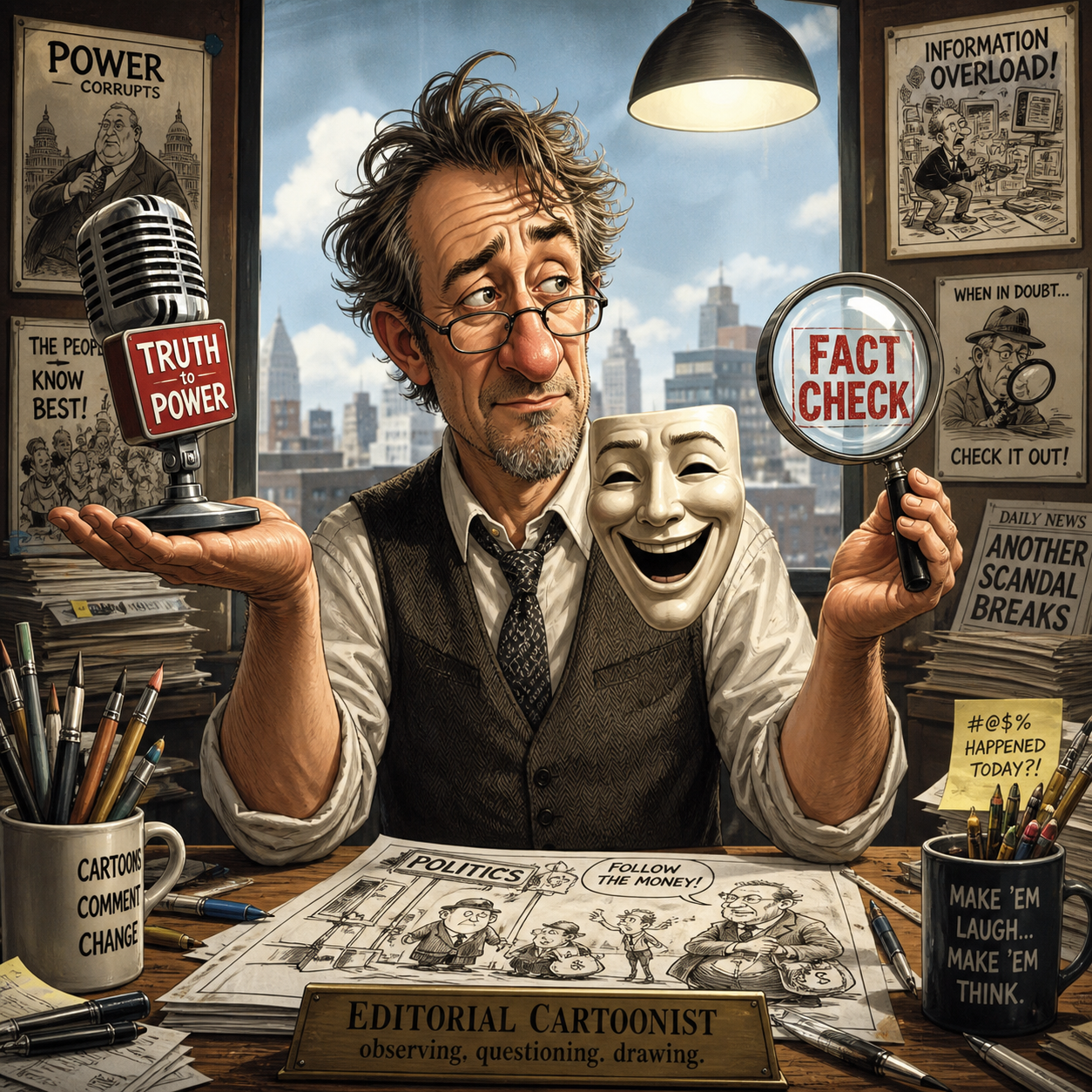
Satirical journalism can make a political point faster than a traditional editorial. A sharp headline, absurd image, or deliberately exaggerated story may expose hypocrisy and make readers question claims they would otherwise accept. The same techniques can also confuse audiences, damage reputations, or spread far beyond the original humorous context.
That tension defines the ethics of satirical journalism. Creative freedom matters, but so do editorial responsibility, public trust, and the foreseeable effects of publication. The central question is not whether satire may offend. It is whether its presentation, target, and likely impact are defensible.
What Makes Satirical Journalism Different?
Satirical journalism uses humor, irony, exaggeration, and invented scenarios to criticize real people, institutions, ideas, or public events. Unlike factual reporting, it does not present every detail as a literal account of what happened.
Satire may imitate the visual language of a newspaper, broadcast, press release, or social-media update. That imitation creates the joke, but it also creates an ethical risk: readers who encounter a cropped screenshot or reposted headline may mistake the work for genuine news.
Traditional journalism generally asks, “What can be verified?” Satirical journalism asks an additional question: “What does this absurdity reveal?” A fictional quote might expose a politician’s contradiction. An exaggerated statistic might criticize the way institutions use numbers. A parody press conference might draw attention to evasive public relations.
The distinction depends on presentation and context, not merely on the creator’s private intention. A piece that is obviously absurd on its original website may appear plausible when shared without its label, logo, introduction, or surrounding articles. Satirical publishers therefore have a duty to make the genre legible.
The Ethical Purpose of Satire
The ethical purpose of satire is to use comic distortion to challenge power, expose hypocrisy, and improve public debate. When aimed carefully, satire can support freedom of expression and strengthen media literacy rather than weaken trust.
Satire has particular value when it “punches up”: directing scrutiny toward powerful politicians, corporations, institutions, influential commentators, or widely accepted ideas. It can compress a complicated criticism into a memorable image and encourage audiences to inspect official language more closely.
That function is different from simply making someone look foolish. Strong satirical journalism usually contains an intelligible claim beneath the joke. It might question whether a government’s promises match its record, whether a company’s environmental language matches its conduct, or whether a media outlet applies its standards consistently.
Satire can also encourage media literacy. Readers learn to notice implausible details, examine a publisher’s “About” page, compare claims with primary sources, and distinguish a humorous argument from a reported fact. The joke becomes an invitation to think, not a substitute for evidence.
Still, a noble target does not excuse every method. A creator can criticize power while using a misleading image, inventing a harmful allegation, or encouraging harassment. Satirical intent explains a work; it does not automatically justify its consequences.
Where Satire Can Cause Harm
Satire can cause harm when audiences mistake fiction for fact, when criticism becomes personal abuse, or when vulnerable groups carry the cost of the joke. Ethical evaluation must consider foreseeable impact as well as creative intent.
Reputational harm is an obvious concern. A fabricated accusation about fraud, violence, sexual misconduct, professional incompetence, or criminal behavior may remain searchable after readers understand the joke. Public figures have greater exposure to criticism, but that does not make every invented claim harmless. Private individuals generally deserve stronger protection, especially when they have no meaningful opportunity to respond.
Satire can also reinforce stereotypes. A joke about an already marginalized community may be defended as irony while repeating the same prejudice it claims to mock. The relevant question is who controls the joke and who absorbs its consequences. Criticizing a discriminatory policy is different from presenting the affected group as inherently dishonest, dangerous, or inferior.
Digital distribution magnifies these risks. Headlines are copied without articles, social posts strip away disclaimers, and images are recaptioned by people who do not share the original intent. A satirical outlet cannot control every repost, but it can reduce predictable confusion through visible labeling and careful design.
Harassment is another boundary. Satire may challenge a public figure’s conduct, but directing readers to flood an individual with abuse or private information turns commentary into participation in harm. Ethical editorial responsibility includes considering the audience’s likely behavior after publication.
The Line Between Satire and Misinformation
The main difference between satire, misinformation, and disinformation is the relationship between intent, presentation, and truth. Satire uses fictional or distorted material for criticism; misinformation is false or misleading content shared without established intent to deceive; disinformation is false or misleading content deliberately created or distributed to deceive.
| Category | Typical purpose | Key warning sign |
|---|---|---|
| Satire | Humorous criticism or social commentary | Exaggeration, irony, or framing signals a nonliteral purpose |
| Parody | Imitation of a person, genre, brand, or institution | The imitation is central to the joke or critique |
| Opinion | Persuasion based on interpretation or judgment | The writer presents a viewpoint rather than a fictional event |
| Misinformation | Sharing inaccurate content, often through error or confusion | False claims appear to be factual and lack adequate verification |
| Disinformation | Strategic deception or manipulation | Falsehood is designed to mislead, influence, or cause harm |
These categories can overlap in practice. A political actor might circulate a genuine satirical article as if it were factual disinformation. A reader might repost satire as misinformation without realizing its context. A publisher might call a misleading article “parody” only after criticism, even though its original presentation encouraged literal belief.
For that reason, classification should examine the headline, image, URL, author note, disclaimers, surrounding content, and distribution strategy. A tiny disclaimer at the bottom of a page may be technically present but ethically inadequate if the headline and social preview look like breaking news.
Practical Ethical Standards for Satirical Newsrooms
Satirical newsrooms should label their work clearly, frame invented material transparently, verify real-world references, protect privacy, and correct misleading impressions quickly. These safeguards preserve creative freedom while reducing avoidable harm.
Label the genre before confusion begins
Use plain language such as “satire,” “parody,” or “humorous commentary” near the headline, in social previews, and in page metadata where possible. Avoid relying only on an “About” page. The label should survive screenshots and links shared outside the publication.
Separate factual scaffolding from fictional claims
Real names, dates, locations, laws, scientific findings, and quotations should be checked carefully. If a story uses a fictional quote, make the fictional status clear. A satirical premise should not depend on an invented allegation that readers could reasonably treat as evidence.
Choose headlines and images responsibly
Images often travel farther than articles. Mark composite images and altered photographs, avoid realistic fake evidence of crimes or disasters, and write social copy that retains the satirical frame. A deliberately misleading thumbnail can defeat an otherwise responsible article.
Apply a harm-aware editorial test
- Is the target a powerful actor, public claim, or institution rather than a private person?
- Could the invented detail cause harassment, panic, financial loss, or lasting reputational damage?
- Does the joke rely on a stereotype about a vulnerable community?
- Would a reasonable reader recognize the piece as satire from the first screen?
- Can the publisher explain the underlying criticism without repeating the harmful fiction?
Editors should also establish a correction policy. If readers were misled, changing a label silently may be insufficient. Explain what created the confusion, update the headline or image, and preserve a visible note when the original framing caused material harm.

The Role of Fact-Checking and Audience Literacy
Fact-checking helps audiences separate verifiable claims from humorous framing, while media literacy helps them recognize when context has been removed. Fact-checkers should clarify satire without treating clearly labeled opinion or parody as a factual report.
A practical verification routine begins with the claim itself. Ask what is being asserted, whether it is literal, and which parts can be checked against primary sources. Consult official records, full interviews, court documents, research papers, or direct statements rather than relying on a cropped screenshot.
Next, inspect the publisher. Does the site identify itself as satirical? Does the article use a consistent humor format? Are labels visible on the page and social accounts? Does the outlet publish corrections when its framing misleads readers?
Readers should be especially cautious when a sensational item appears as a single image or isolated paragraph. Search the exact headline, open the original page, read beyond the first sentence, and compare the claim with reputable reporting. Before sharing, preserve enough context for others to understand the genre.
Fact-checkers can add value by explaining the mechanism of confusion: the story was satire, the screenshot omitted its label, the quotation was fictional, or a real event was presented with invented details. That approach informs the public without demanding that satire be removed from debate.
A Practical Test for Drawing the Line
Use six questions to decide whether satirical journalism is ethically defensible: Is the presentation honest about its genre, is the criticism meaningful, is the harm foreseeable, and is the response proportionate? The test is a decision aid, not a legal ruling.
- Truthfulness of presentation: Does the overall design avoid creating a false impression that the article is a verified report?
- Foreseeable harm: Could the content trigger harassment, panic, discrimination, financial loss, or permanent reputational damage?
- Target: Does it challenge power, conduct, or ideas rather than humiliating a private person or vulnerable group?
- Clarity of labeling: Would a reader encounter an unmistakable satire label before sharing the content?
- Proportionality: Is the fictional device necessary for the criticism, or is it an excessive way to make the point?
- Correction readiness: Will the publisher listen, explain, update, and apologize if the work misleads people?
A “no” answer does not always require cancellation. It may call for a different image, a clearer disclaimer, a less personal target, or removal of an invented allegation. The strongest editorial choice is often the one that preserves the criticism while reducing collateral damage.
Frequently Asked Questions
Is satire protected as journalism or free expression?
Satire commonly receives protection as expressive speech, but the exact legal rules vary by jurisdiction and facts. Protection is not a blanket exemption from laws concerning defamation, privacy, threats, harassment, or other unlawful conduct. Ethical standards can also be stricter than the legal minimum.
How can readers tell whether a news story is satire?
Check the publisher’s description, labels, author notes, unusual exaggeration, URL, and surrounding content. Search the headline and read the complete article before sharing a screenshot or excerpt.
Should satirical websites label every article?
Yes. Consistent labeling is the safest practice, especially when a site imitates a conventional newsroom. Labels should appear where readers encounter the content, including headlines, social posts, and images when practical.
Can satire be defamatory or harmful?
Yes. A humorous label does not erase foreseeable reputational or personal harm. Risk increases when satire presents a specific, damaging allegation about an identifiable private person or uses realistic evidence that readers may believe.
What should a satirical outlet do after misleading readers?
Correct the headline, image, or framing promptly; publish a clear explanation; contact affected individuals when appropriate; and review the editorial process that allowed the confusion. Accountability strengthens public trust more effectively than insisting that every misunderstanding is the audience’s fault.